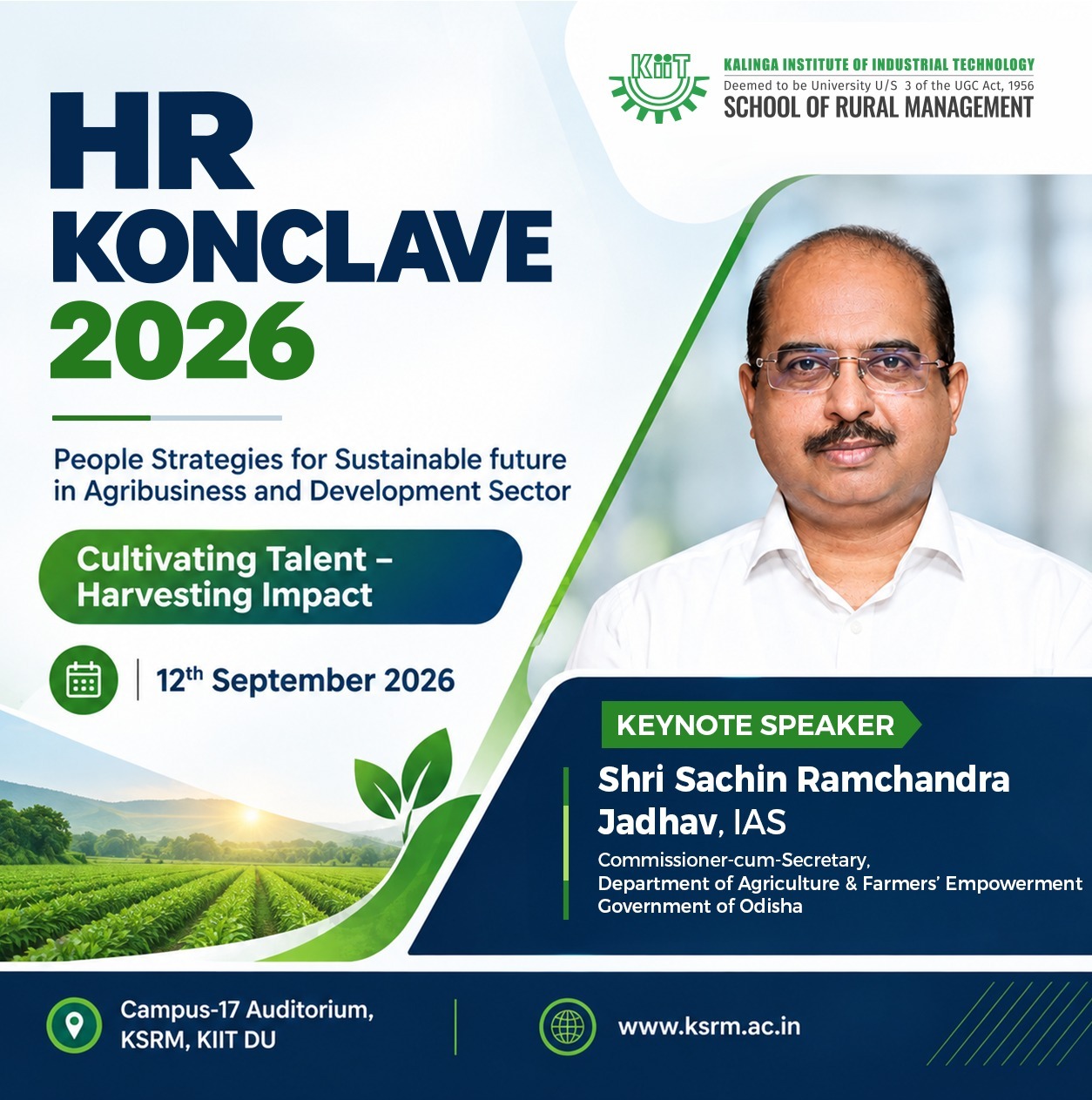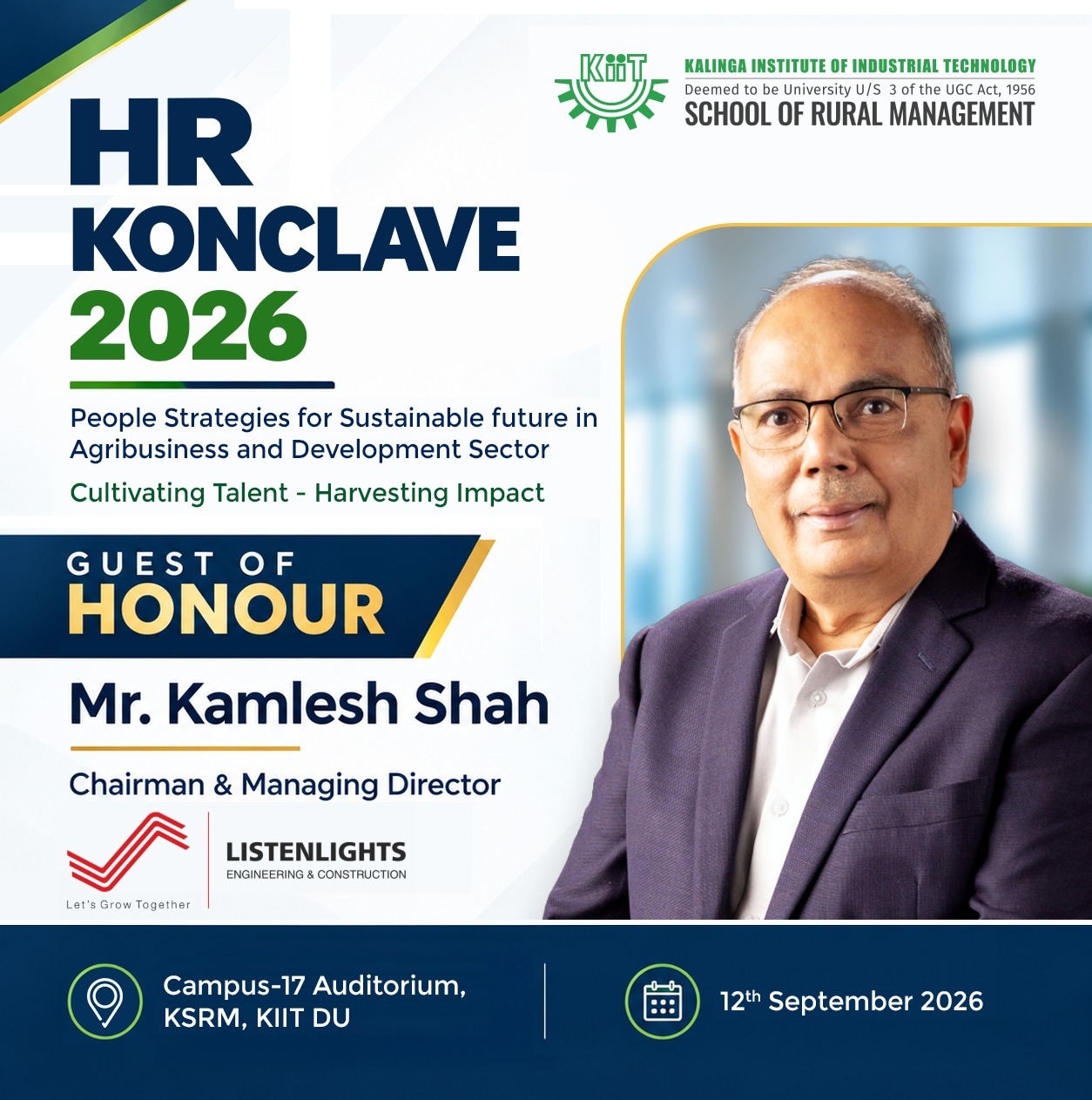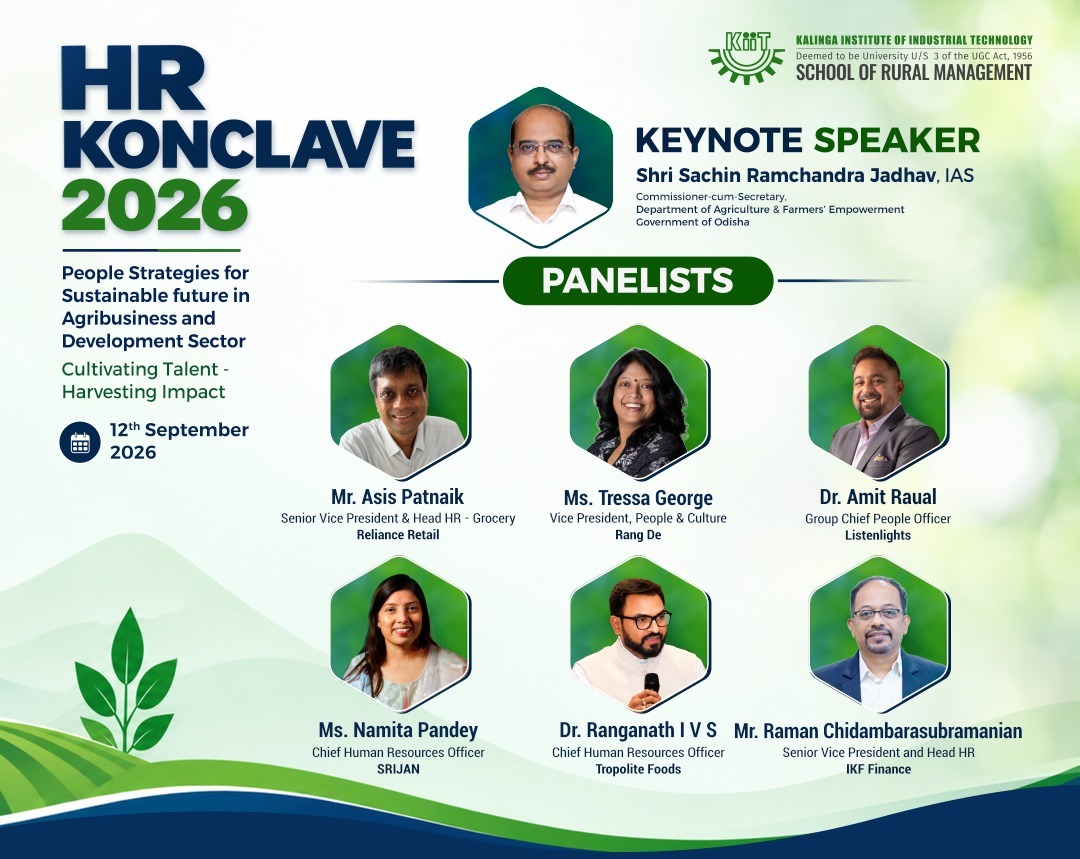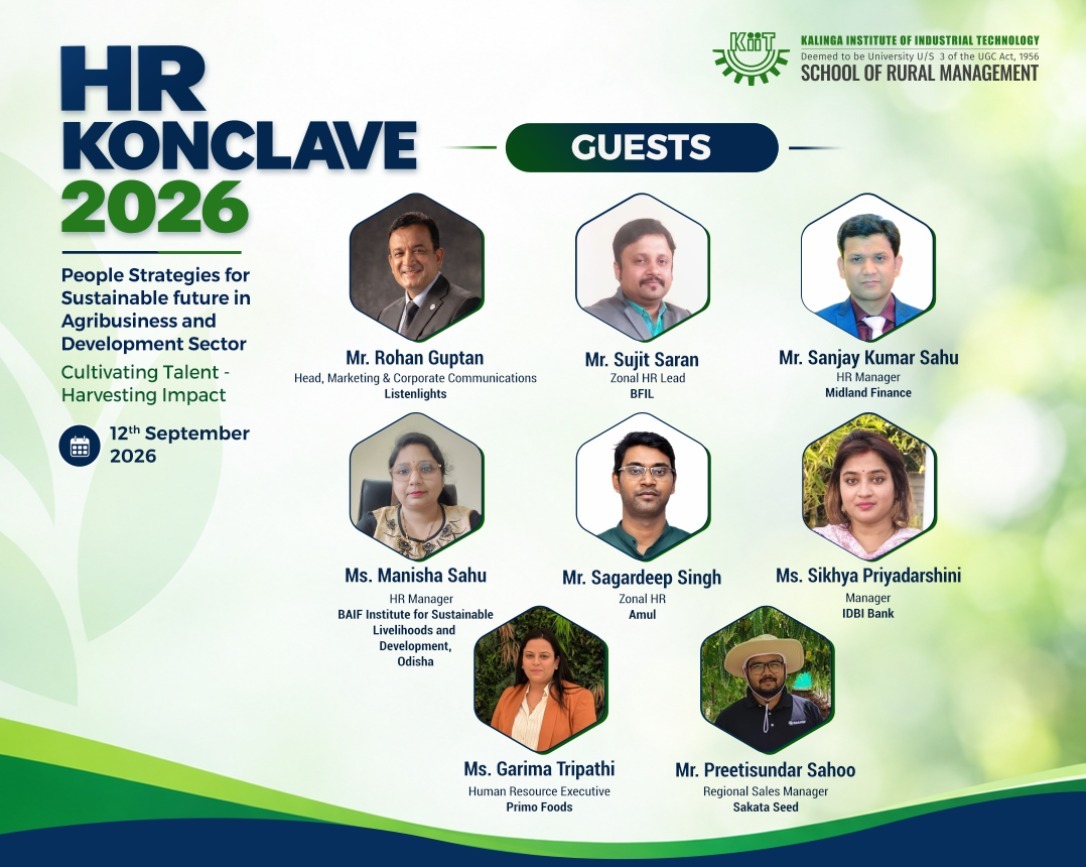

About the Konclave
Human Resource Management is undergoing a profound transformation driven by technological advancements, evolving workforce expectations, increasing emphasis on employee well-being, and the growing need for responsible and inclusive leadership. For organizations operating in rural development and agribusiness sectors, these changes present unique opportunities and challenges in attracting, nurturing, and retaining talent while maintaining strong organizational values and social impact.
The HR Conclave 2026 aims to bring together industry leaders, HR professionals, academicians, development practitioners, and management students to deliberate on emerging people-management challenges and innovative HR practices that can strengthen organizations working in rural and agribusiness ecosystems. The conclave will serve as a platform for exchanging ideas, sharing best practices, and preparing future managers to lead with purpose, resilience, and responsibility.
The success of organizations increasingly depends on their ability to attract high-quality talent, continuously develop employee capabilities, and create an environment that encourages long-term commitment. Rural and agribusiness organizations often face additional challenges related to location, talent availability, and workforce diversity.
Employee well-being has emerged as a strategic priority for organizations seeking sustainable performance and workforce engagement. Increasing workplace pressures, changing work arrangements, and heightened mental health concerns necessitate proactive organizational interventions.
Technology is reshaping the workplace through automation, artificial intelligence, analytics, and digital platforms. While these innovations improve efficiency and decision-making, organizations must ensure that technological progress remains aligned with ethical principles, human dignity, and organizational values.
The managers of tomorrow must possess not only technical and managerial competencies but also the ability to navigate uncertainty, drive innovation, and create meaningful societal impact. Developing such leaders is essential for building resilient and sustainable organizations.
Why This Conversation Matters
- 14% of Indian employees are “thriving”, while 86% are either struggling or suffering in their lives and work, significantly below the global average of 34% thriving employees (Gallup, 2024; State of the Global Workplace Report)
- Mental health concerns entered the top three workplace issues in India (State of Emotional Well-being at Work 2024).
- 62% of Indian employees experience work-related stress and burnout, which is nearly three times the reported global average (CII–MediBuddy Report on Workplace Health and Wellness, 2024).
- Indian employees were also among the most likely to feel pressured to compromise organizational standards (Ethics at Work Survey – India Findings, Institute of Business Ethics, 2024).
- 25% of employees were aware of misconduct or illegal activity in their workplace during the previous year (Ethics at Work Survey – India Findings, Institute of Business Ethics, 2024).
Conclave Structure
Keynote Address
Will be Delivered by a top industry leader in the area of HR Management on the central theme. The keynote sets the context and stage for the panel discussion that follows.
A Single Panel of Six
One panel of six senior HR professionals from Development and Agribusiness sector will discuss on the theme touching across the four sub-themes with a single connected dialogue. It will be followed by a question and answer session with audiences. The panel discussion will be moderated by one of the speakers in the panel itself.
Key Areas for Discussion- The Four Pillars
The panel will engage across four interlinked pillars across people strategies.
Pillar 1: Attracting, Developing and Retaining Talent
- Employer Branding for Rural and Agribusiness Organizations: Building an attractive value proposition for emerging talent.
- Skill Development for Future-Ready Agribusiness Professionals: Bridging academic learning with industry requirements.
- Engaging and Retaining Multi-Generational Talent: Strategies for managing diverse workforce expectations.
- Inclusive Talent Management in Rural Ecosystems: Leveraging diversity, community engagement, and OD interventions for sustainable talent retention.
Pillar 2: Employee Well-being and Mental Health
- Psychologically Safe Workplaces: Fostering openness, trust, and emotional security.
- Preventing Burnout: Sustainable approaches to productivity and resilience.
- Work–Life Balance in the Hybrid Era: Redefining boundaries and flexibility.
- Managerial Role in Supporting Employee Mental Health: Early identification, empathy, and intervention.
- Building Organizational Cultures of Well-being: Embedding wellness into policies, practices, and leadership
Pillar 3: Balancing Technology and work with Values
- Ethics and Responsible Use of Technology at Work: Addressing fairness, transparency, accountability, privacy, confidentiality, responsibility
- Preserving Organizational Values in a Technology-Driven Workplace: Purposive, inclusiveness, and sustainability
- Leading with Empathy in the Age of Automation: Combining technological efficiency with human values (integrity, dignity, respect).
- Digital Well-being and Managing Tech Fatigue: Strategies for healthy technology use.
Pillar 4: Preparing Managers for Impact
- Developing Purpose-Driven Leaders: Competencies required for future leaders.
- Building Adaptive and Resilient Managers: Skills to lead effectively amidst uncertainty and change.
- Cultivating Innovation and Social Responsibility: Preparing managers to deliver both business and societal value.
- From Campus to Industry: Bridging the academia to industry
Dr. Jyotiranjan Gochhayat
Convenor
Prof. Nirmal K Mandal
Co-Convenor
Dr. Surendra Kumar Jena
Co-Convenor