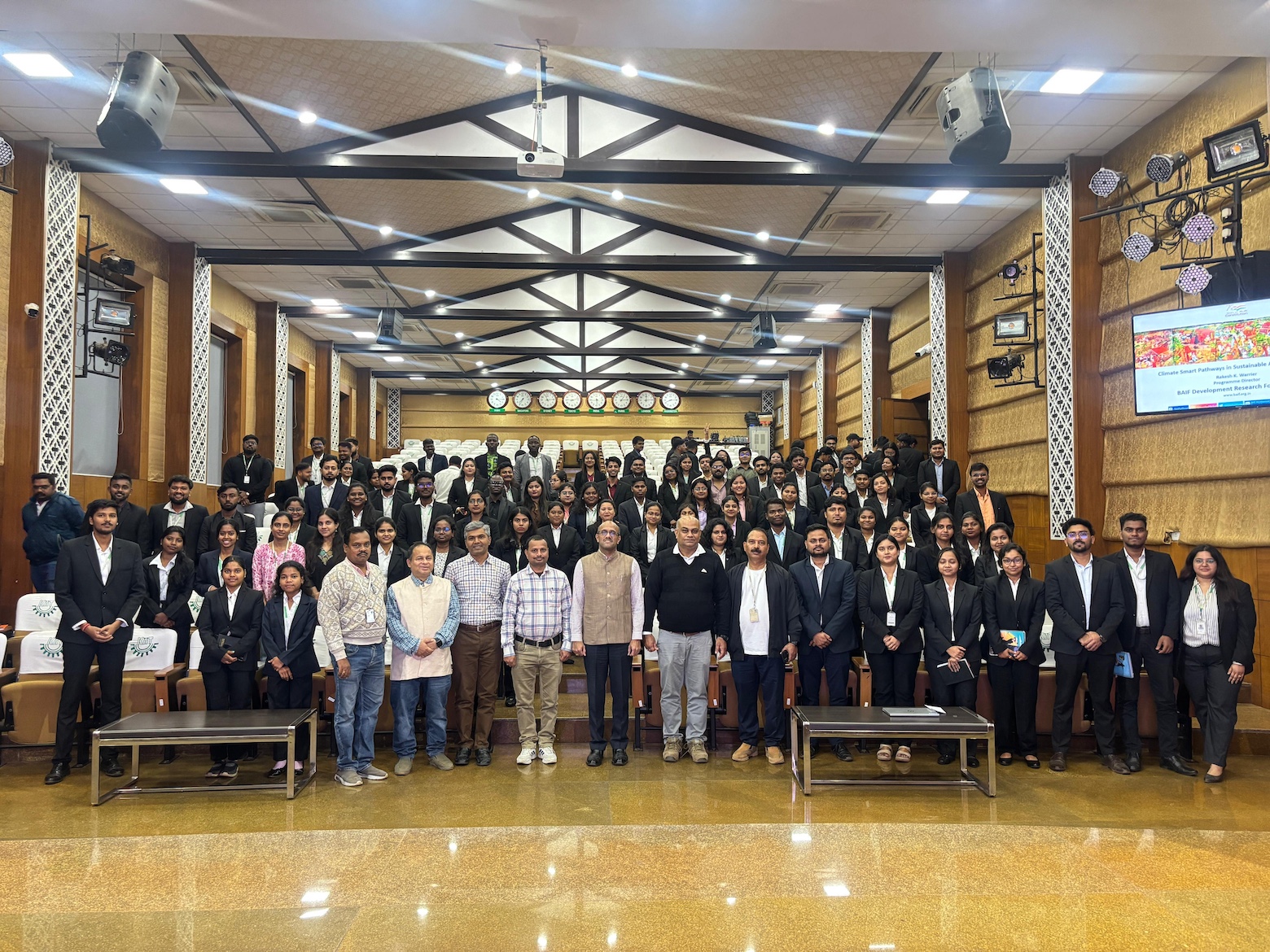

It explained the twin approach of mitigation (reducing emissions through efficient resource use, clean energy, and improved livestock management) and adaptation (helping farmers cope with climate risks through resilient crops, water efficiency, and livelihood diversification). The key message was that Indian agriculture must integrate both, as farmers are simultaneously contributors to and victims of climate change.
The session also connected global climate frameworks like the IPCC and UNFCCC with India’s commitments under NDCs and SAPCCs, showing how national and state policies guide climate-resilient development. Concepts such as Green Credit and ESG were discussed to highlight the shift from subsidy-based approaches to incentive- and performance-driven sustainability. BAIF’s work in efficient livestock management and decentralized renewable energy applications, including solar-powered irrigation and bio-energy solutions, was presented as practical models that reduce emissions while improving farm incomes.
The session emphasized the importance of linking local development actions with national climate goals. Climate-smart village interventions, farmer awareness on clean energy and sustainable practices and field-level impact measurement were identified as key areas where future professionals can contribute. Overall, the learning reinforced that climate-smart agrifood systems are not just an environmental priority but a viable pathway for inclusive and sustainable rural development